
Technical Blueprint · System Architecture
Architecture, scale, and the integration surface.
Technical Blueprint·12 deliverables
- System Architecture
- Data Model
- Scale Path
- Integration Surface
- Edge Layer
- Application Layer
- Data Layer
- Auth + RLS
- Observability
- Build vs Buy
- Migration Path
- Downstream Feed
When it triggers
Technical generates after UX/UI defines the surface to ship.
You can't architect for nothing — the engineering plan reads from the flows + components + data the UX/UI Blueprint commits to, then commits to a stack that ships them at scale.
An idea scored on commercial fit
A UX/UI Blueprint defining the surface to build
Foundation + Strategy Map locking the wedge
Strategic input
Read from strategy + experience evidence, not from a stack-of-the-month tweet.
From your Strategy Map
- Selected path with defensibility hypothesis
- Build vs buy stance on critical components
- Risk tolerance for early architectural lock-in
From Market Intelligence
- Performance + latency expectations in the segment
- Compliance + residency requirements
- Integration partners customers already use
The real surface
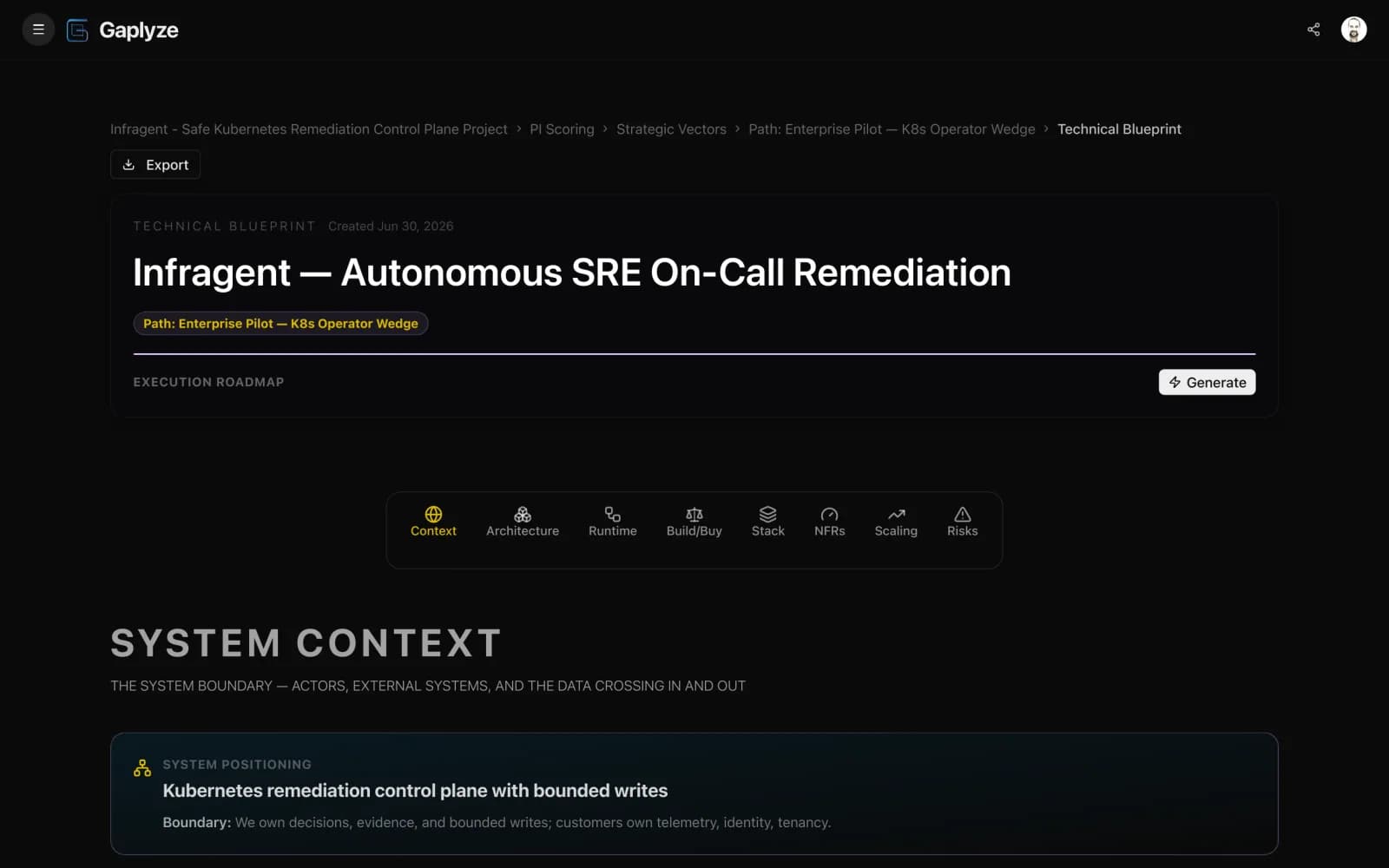
A system-context diagram and a layer-by-layer plan.
The actual Technical Blueprint — the system architecture, the data model, the edge/application/data layers, and the scale path. Open it and scroll the whole thing.
Roadmap outputs
From an architecture to the tasks your team executes.
Scaffold
- Edge + app + data layers wired
- Auth model + RLS policies live
- Observability baseline (logs + metrics + traces)
Build
- First-value flow shipped to staging
- Background workers running
- Integration surface stubbed and tested
Harden
- Quarterly architecture audit
- Cost-per-request budget tracked
- Migration path documented for each component
Prompt-pack outputs
Context for your AI coding agent — from architecture to integration.
Architecture briefing
System context + components + scale assumptions packaged for an AI coding agent
Data-model pack
Entity diagram + constraints + RLS policies ready to scaffold migrations
Integration brief
Per-integration scope, auth model, and contract test patterns
Sibling blueprints
Where Technical stops — and where each sibling picks up.
UX/UI Blueprint
UX/UI defines the surface. Technical defines the system that makes the surface work at scale.
Data Advantage Blueprint
Technical defines storage + queries. Data Advantage defines the dataset strategy that compounds over time.
Regulatory and Trust Blueprint
Technical defines the controls in code. Regulatory and Trust defines the obligations the controls must satisfy.
Start free
Score the idea, lock the design, generate the engineering plan.
No credit card. Generate the architecture, data model, and integration map — upgrade for deeper roadmaps, prompt packs, and exports.
FAQ
Technical questions, answered.
What build-stack choices does the Technical Blueprint commit to?
It commits to a defensible stack matched to your wedge — runtime, framework, data store, hosting target, and observability layer. Each choice carries the rationale (why this one, what we ruled out, what changes the answer).
What scale assumptions does it use?
Reference traffic, write volume, latency band, and concurrency budget for the first year — sourced from your Foundation customer + GTM funnel, not from a hand-waved estimate. Re-generates against new evidence.
Does Gaplyze write code?
No. Gaplyze produces the architecture, data model, scale path, and integration surface — the prompt-pack briefs your AI coding agent (or your engineers) consume to scaffold the build.
How does it handle integration with existing systems?
Each external surface (auth, payments, email, analytics, your own legacy systems) is named, ownership-classified, and called out in the integration map. The roadmap reserves time for the integration glue.
Do I get cost estimates?
Yes — per-component cost bands across the first 12 months, with usage assumptions made explicit so you can swap them when traction lands.
Can I migrate the architecture later?
Yes. The blueprint is versioned. When the wedge or scale assumption changes, you regenerate against the new anchors and the migration plan becomes a Roadmap entry.
Continue reading
Where the Technical Blueprint goes next.
Stop arguing the stack. Ship the architecture.
Architecture, data model, scale path, integrations — one engineering plan your team executes from.